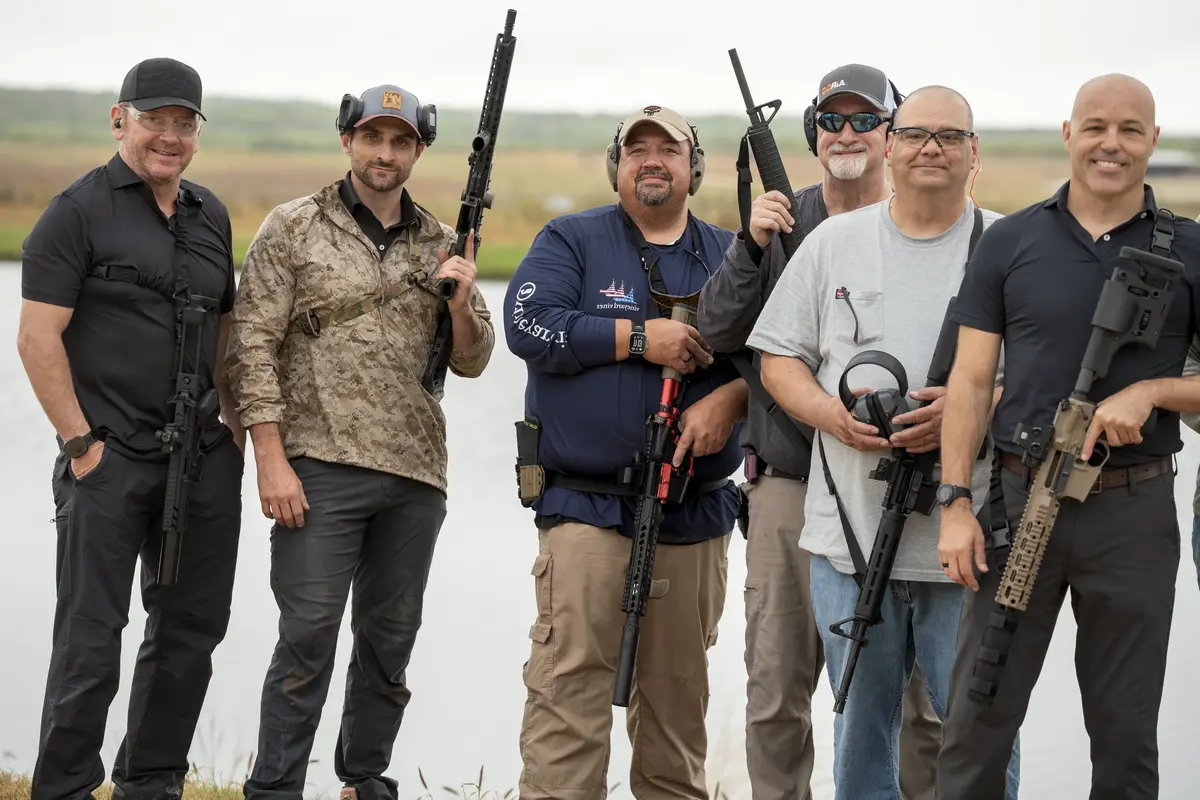
A stronger team starts with a shared challenge.
Give your people the space to step out of their usual roles, practice working together, and see what they can accomplish when every person contributes.
At a Texas ranch, your team works alongside retired Navy SEAL instructors through supervised training, a separate team mission, and candid debriefs. The experience is shaped around your people and the leadership challenges you want to address.
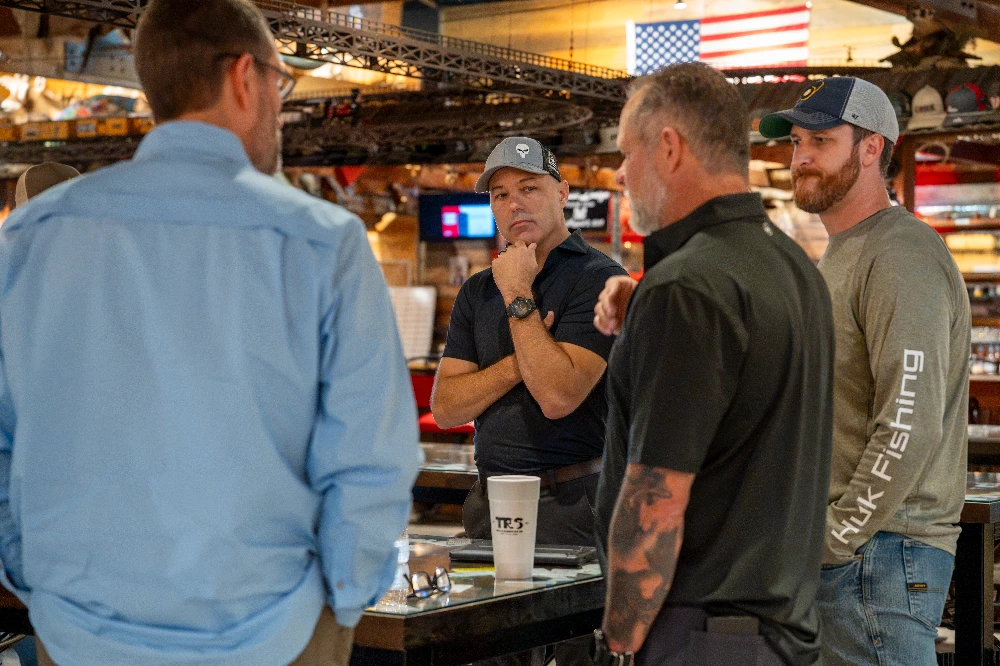
What your team can take back to work
-
01
Clearer communication
Share intent, raise concerns, and check that everyone understands the plan.
-
02
Stronger individual ownership
Prepare well, follow through, and understand how each person's decisions affect the team.
-
03
Better teamwork under pressure
Use sound judgment, adapt as conditions change, and ask for help when it matters.
-
04
Practical commitments
Turn honest reflection into specific changes your people can use at work.
Training Approach & Simulations
Coaching and Group Practice
In the individual sessions, we help each person choose a leadership challenge and develop the skills and tactics to address it. That might mean preparing for a difficult conversation, following through on a commitment, or building a small habit that supports a larger goal. Goal review, mental rehearsal, and breathing practices support that work when useful.
In the group sessions, conducted at campus, we practice communication and invite participants to bring leadership challenges the team can help them think through. We want honest participation, with clear boundaries around what people choose to share.
Range Experience and Team Mission Simulation
Range Day
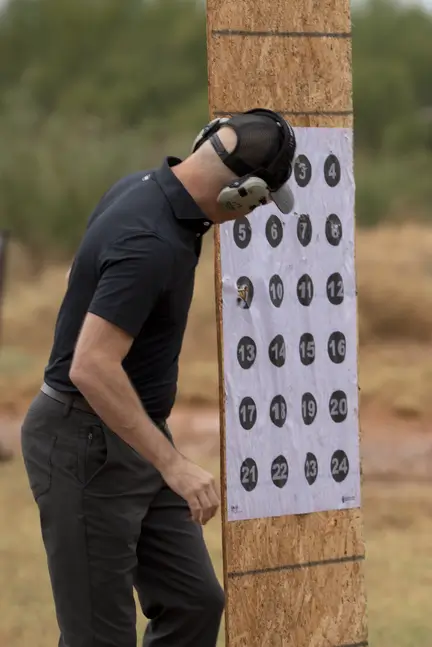
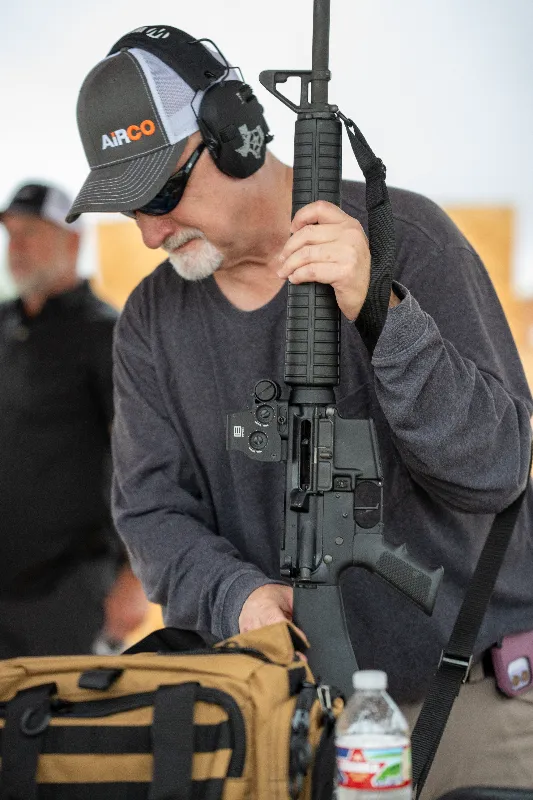
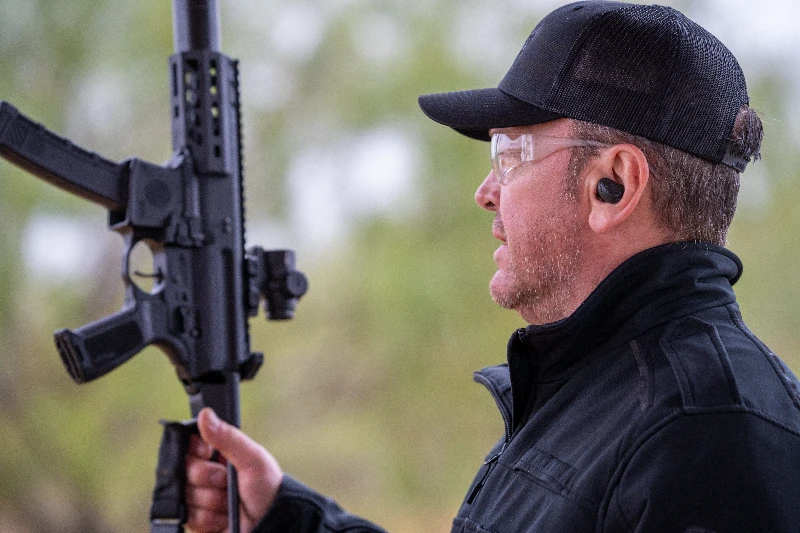
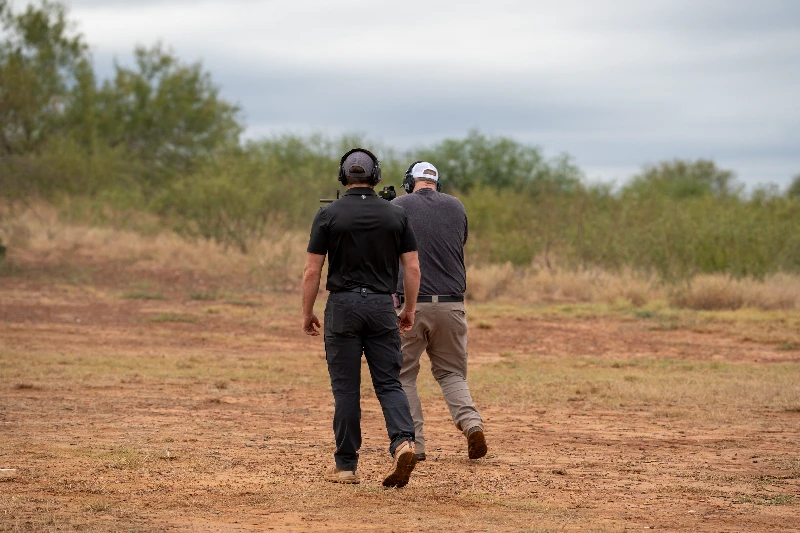
No prior experience is required, and for many participants, this will be their first time handling a firearm. Navy SEAL instructors will teach safe handling and marksmanship fundamentals using an AR-style carbine. Each person advances to the next, more complex skill once they're comfortable and consistent with the current one. The group will be divided into teams that compete in timed accuracy drills, where every individual score counts toward the team total, so each person sees how their performance shapes the team's result.
The Mission
We assign mission roles based on what we learned about each person in the one-on-ones, not job titles, so the mission org chart may look nothing like the corporate one. The team plans and runs a night operation modeled on a typical SEAL mission, with complications drawn from well-documented real operations. They send a surveillance element ahead, move on foot to the objective, link up, secure the building, recover the hostages, and return to base, adapting as the plan meets reality.
Participants carry realistic-looking Airsoft rifles that fire small plastic BBs, and the role players acting as the enemy carry replica rifles that fire nothing. No live firearms or ammunition are used in the mission.
The Debrief
The after-action review is where the learning happens. We walk through planning and execution step by step: what went right, what went wrong, and how decisions got made under stress with incomplete information.
Each person owns their mistakes out loud and practices telling a peer, clearly and respectfully, what they did well and what they didn't. Along with fun stories (and maybe some bragging rights), teams bring that skill back to work.
How the Training Works
Getting to know each participant before the on-site experience lets us tailor the training, support individual goals, and build buy-in. The sequence includes an introductory conversation, three individual sessions before the event, two group sessions between the second and third individual sessions, and one individual follow-up about a month afterward.
-
Step 01
Introductory Conversation
20-30 min per personEstablish rapport, explain the process, and identify a work-relevant challenge.
-
Step 02
Individual Sessions 1 & 2
60 min each per personClarify goals, identify obstacles, and develop a practical routine for preparation, action, and review.
-
Step 03
Campus Group Sessions
60-90 minSession mindset readiness and introduction to SEAL standards.
-
Step 04
Individual Session 3
60 min per personReview practice, refine commitments, and prepare for the team experience.
-
Step 05
Immersive Team Experience
Two DaysApply preparation, communication, role clarity, and adaptation in supervised activities.
-
Step 06
Follow-Up Session
60 min per personReview workplace application approximately one month after the event and agree next steps.
The Two-Day Experience
| Time | Activity | Leadership Focus |
|---|---|---|
| 9:00 - 10:00 | Arrival and program orientation | Set shared intent; confirm readiness and safety expectations. |
| 10:00 - 12:00 | Supervised range fundamentals | Practice preparation, attention, clear instructions, and composure. |
| 12:00 - 1:00 | Lunch and recovery | Informal connection with the instructor team. |
| 1:00 - 3:00 | Range practice and facilitated reflection | Examine individual responsibility and its effect on the group. |
| 3:00 - 5:00 | Mission briefing and team planning | Clarify roles, share information, challenge assumptions, and develop a coordinated plan. |
| 5:00 - 7:00 | Dinner and preparation break | Rest and prepare for the separate simulation. |
| 7:00 - 9:00 | Team mission simulation | Practice coordination and adaptation in assigned roles. |
| 9:00 - 9:30 | Immediate reflection and close | Capture observations for the next day's review. |
| Time | Activity | Leadership Focus |
|---|---|---|
| 8:30 - 9:00 | Breakfast and check-in | Review readiness and questions from the previous evening. |
| 9:00 - 11:00 | Facilitated after-action review | Examine decisions, communication, strengths, and mistakes with candor. |
| 11:00 - 12:00 | Leadership application workshop | Connect observations to current workplace challenges. |
| 12:00 - 1:00 | Lunch | Continue discussion and peer connection. |
| 1:00 - 2:30 | Individual commitments and team practices | Agree what participants will change and how progress will be reviewed. |
| 2:30 - 3:00 | Closing discussion and departure | Confirm follow-up and accountability. |
Bring the learning back to work
Your team leaves with agreed practices and individual commitments. Optional follow-up coaching can help participants reflect on what they've applied and where they need support.
Discuss Your Team